In today’s competitive world, every hidden inefficiency is a missed opportunity. The Six Sigma approach doesn’t just help you identify the flaws you already know—it uncovers the ones you haven’t seen yet. It shows you what to measure, where to act, and how to reduce costly errors that consume time, erode profit margins, and chip away at customer trust. In short, Six Sigma turns insight into a real competitive advantage.
What Six Sigma Means
Six Sigma is both a statistical concept and a management philosophy. At its core, it measures process performance in terms of defects. Reaching Six Sigma means just 3.4 defects per million opportunities—a near-perfect output.
In statistics, the Greek letter sigma (σ) represents the standard deviation—a measure of variation. In business, it’s used to indicate how far a process is from perfection. The fewer the defects, the higher the sigma level.
- 1 sigma = 691,462 defects per million (only 30.854% defect-free output—clearly unacceptable)
- 3 sigma = 66,807 defects per million (93.319% defect-free—better, but still costly)
- 6 sigma = 3.4 defects per million (virtually perfect)
Most companies operate between 3 and 4 sigma. That level often hides substantial waste—lost time, unhappy customers, and up to 25% of revenue lost to rework or service recovery.
The Core Principle
If you can measure defects, you can find ways to eliminate them. The aim is consistent, near-flawless performance. Six Sigma is:
- A statistical benchmark: 3.4 defects per million opportunities
- A management philosophy: relentless focus on defect elimination
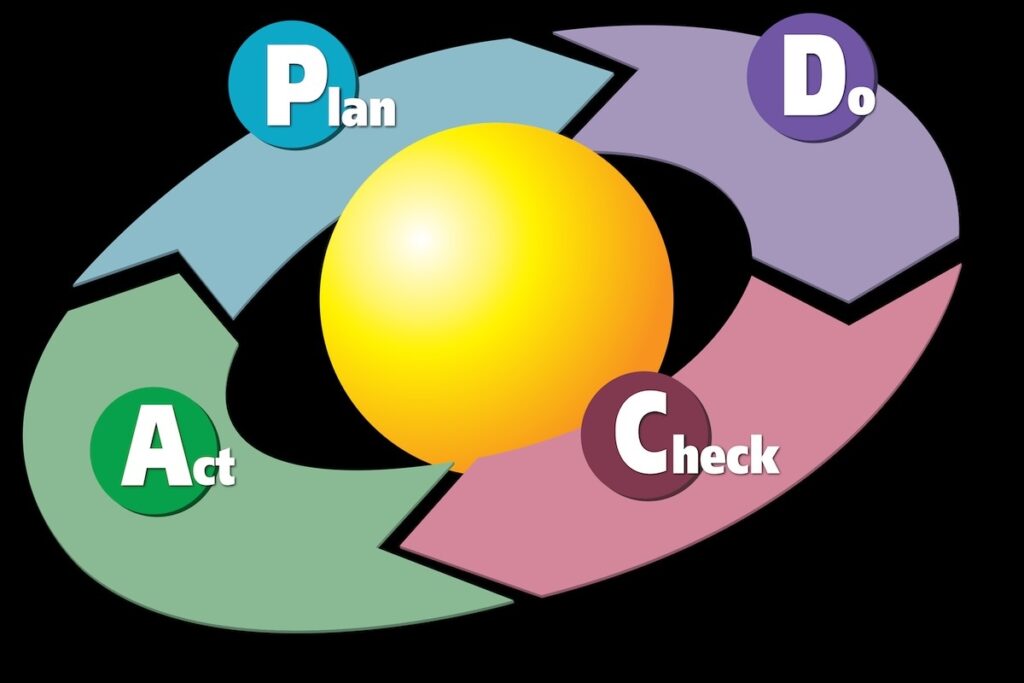
- A methodology: define, measure, analyze, improve, control (DMAIC)
- A quality symbol: the pursuit of operational excellence
A Practical Example
Consider baggage handling in airports. At a typical 3 sigma level, around 66,000 bags per million are lost or delayed—meaning roughly 94% arrive on time. That might sound decent, unless you’re one of the passengers whose bag didn’t make it.
Each mishandled bag triggers costs: tracing, retrieving, delivering, and appeasing upset customers—sometimes leading them to switch airlines entirely.
If an airline improves baggage handling to Six Sigma levels, the cost savings, customer loyalty, and brand reputation gains far outweigh the investment.
The Cost of “Good Enough”
At 3 sigma, 6% of bags are mishandled. Financially, the cost impact can be far greater than 6% of the process expense—sometimes running into millions annually. Improving the process frees up staff time, reduces waste, and raises profitability.
Ask yourself:
- How many customers can your business afford to lose?
- How much are you willing to spend on fixing preventable mistakes?
Six Sigma in Action
Six Sigma isn’t just about spotting defects—it’s about revealing the variables you must understand and control to eliminate waste and deliver consistent quality. Leadership commitment to measure, analyze, improve, and control processes changes outcomes fundamentally.
From TQM to Six Sigma
Six Sigma builds on decades of quality thinking, especially the work of W. Edwards Deming, whose Total Quality Management (TQM) approach transformed industries after WWII. TQM focused on continuous improvement, team involvement, data-driven decisions, and exceeding customer expectations.
Six Sigma takes that foundation further:
- It adds a more disciplined, data-intensive structure
- It sets a specific, measurable target—near-zero defects
- It aligns quality with profitability and growth
Proven Results
This is not a passing management fad. Companies like Motorola, Texas Instruments, IBM, AlliedSignal, and General Electric have saved billions by applying Six Sigma. GE’s CEO Jack Welch called it “the most important initiative GE has ever undertaken” and “part of the genetic code of our future leadership.”
Others—Ford, DuPont, Dow Chemical, Microsoft, American Express—have followed suit, leveraging Six Sigma to improve quality, reduce costs, and strengthen their market position.
The Bottom Line
Six Sigma isn’t just about better processes—it’s about building a culture where excellence is measurable, repeatable, and profitable. The question isn’t whether you can afford to aim for Six Sigma—it’s whether you can afford not to.